
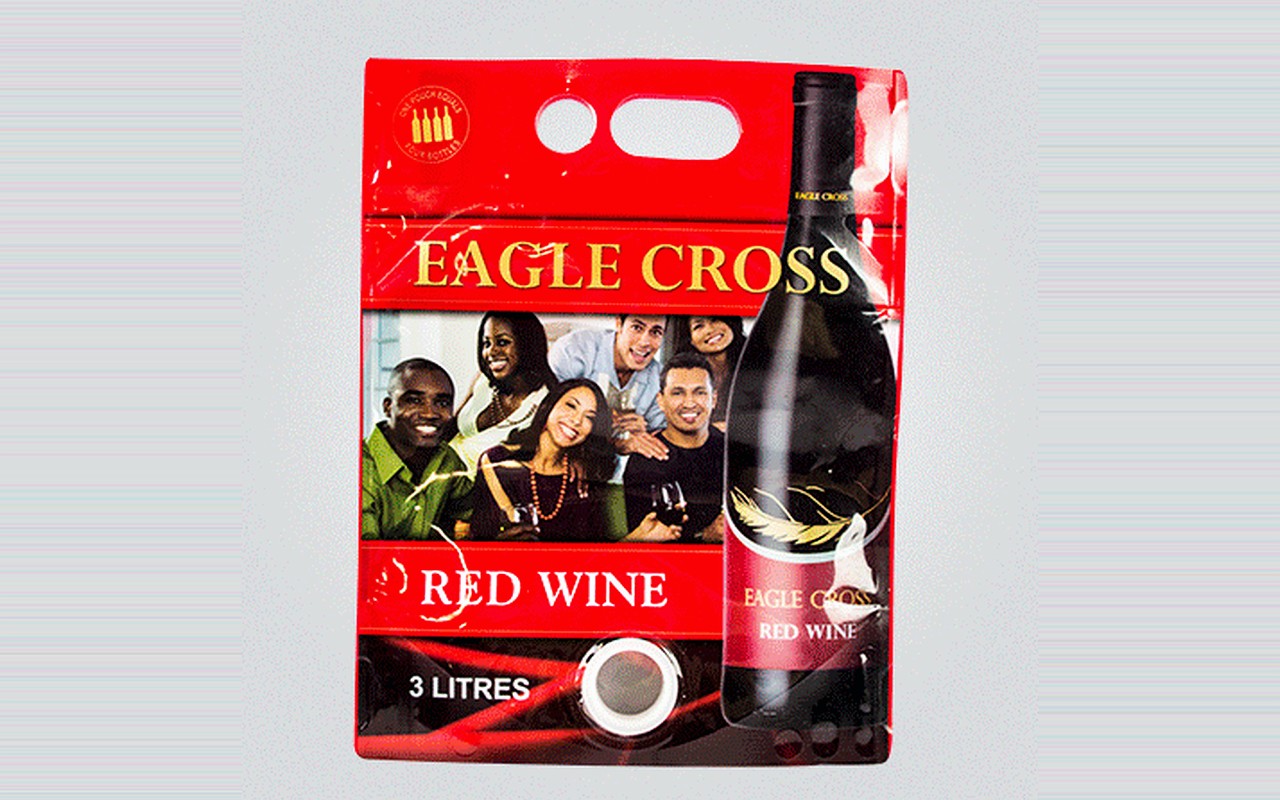
Bag-in-Box for Wine, Oil and Liquids
A collapsing bladder inside a printed case: the wine keeps tasting like wine six weeks after the first glass, and the oil never meets the oxygen that would turn it rancid.
Why bag-in-box beats the bottle after the first pour
Everything that happens to an opened bottle of wine happens because air replaces the wine you poured. A bag-in-box bladder collapses as it empties, so the headspace never exists. That single mechanical fact is why a three-litre box still tastes fresh four to six weeks after opening while a recorked bottle is tired in three days.
For olive oil the argument is even stronger, because oil is destroyed by light as well as oxygen. A metallized or EVOH bladder inside a printed case is a total light barrier — better than green glass and far better than the clear PET jugs the foodservice channel still buys.
There is also a simple economics story. Per litre delivered, bag-in-box uses a fraction of the packaging weight of glass, ships more litres per pallet, breaks less and costs less to freight. For a restaurant pouring by the glass or a caterer buying oil by the case, the format is not a compromise — it is the professional choice.
The bladder, the fitment and the case are three decisions
The bladder is where shelf life lives. A single-layer metallized polyethylene bladder is the economical workhorse for wines with a six- to nine-month sell-through. A multi-layer bladder with an EVOH barrier layer is what you choose for a twelve-month-plus programme, for premium wine, and for any oil.
The fitment decides the consumer experience. A vitop-style tap is the familiar wine tap: it dispenses cleanly, seals air-tight and it is what the shopper expects on a retail box. A press-tap is a cheaper push-button dispenser suited to foodservice. A plain screw spout is used when the customer decants rather than pours. We fit whichever you specify to the bladder before it ships.
The case is the part your customer actually sees, so we print it as carefully as we print a bottle label. Full-colour litho-laminated or direct-printed corrugated, matte or gloss varnish, spot foil for the crest, a die-cut handle, and — this is the part suppliers forget — the same signed colour target as the bottle label of the same wine.
Filling: at your line or with your co-packer
Bag-in-box bladders are filled through the fitment on a dedicated filler, typically under nitrogen or with a vacuum draw to remove residual air. If you already have a filler, we supply bladders wound and boxed to your machine's presentation, with the fitment orientation your head needs.
If you do not, we will point you at co-packers in Southern California and Baja California who do this every day, and we will supply them directly against your purchase order so you are not managing two suppliers on one delivery date.
Volume-wise, we cover 1.5, 3, 5, 10, 15 and 20 litres as standard, plus 1-litre and 2-litre formats for retail-facing premium wine. Non-standard volumes are possible; they need their own bladder tooling, which we will quote as a one-time cost.
What this product includes
Typical applications
- Retail wine in 1.5 L, 3 L and 5 L consumer boxes
- By-the-glass wine programmes for restaurants and hotels
- Extra virgin olive oil and blended cooking oils for foodservice
- Juices, purées, concentrates and cocktail mixers
- Syrups, sauces and liquid dairy for institutional kitchens
- Bulk wine and oil transfer between winery and bottler
Films, resins and finishes
- Metallized polyethylene bladder film for economical barrier
- Multi-layer EVOH bladder for extended shelf life and oils
- Vitop-style dispensing taps in several body colours
- Press-tap and screw-spout fitments for foodservice
- B and E-flute corrugated cases, litho-laminated or direct printed
- Cold foil, matte and gloss varnish on the printed case
Frequently asked questions about bag-in-box (wine & oil)
Four to six weeks is the working answer for a well-made three-litre box kept cool, because the bladder collapses and no air enters. Unopened, shelf life depends on the bladder: a metallized structure is generally sold within six to nine months, an EVOH structure carries twelve months or more.
We manufacture and supply the bladders, fit the taps and print the cases. Filling happens on your line or at a co-packer, and we regularly ship directly to co-packers in Southern California and Baja California against a single purchase order from you.
That is the point of buying both from one supplier. We measure your existing label, build a draw-down on the corrugated stock, and run the case against the same signed colour target. Matching across two substrates is never a coincidence — it has to be engineered.
It is arguably the best available format for oil, because it excludes both oxygen and light, which are the two things that turn oil rancid. Use an EVOH bladder rather than a simple metallized one, and specify a fitment rated for the viscosity and the fill temperature.
Let's spec your packaging
Send us the product, the process and the volume. You get a structure proposal, a tooling cost and a lead time within 24 business hours.