
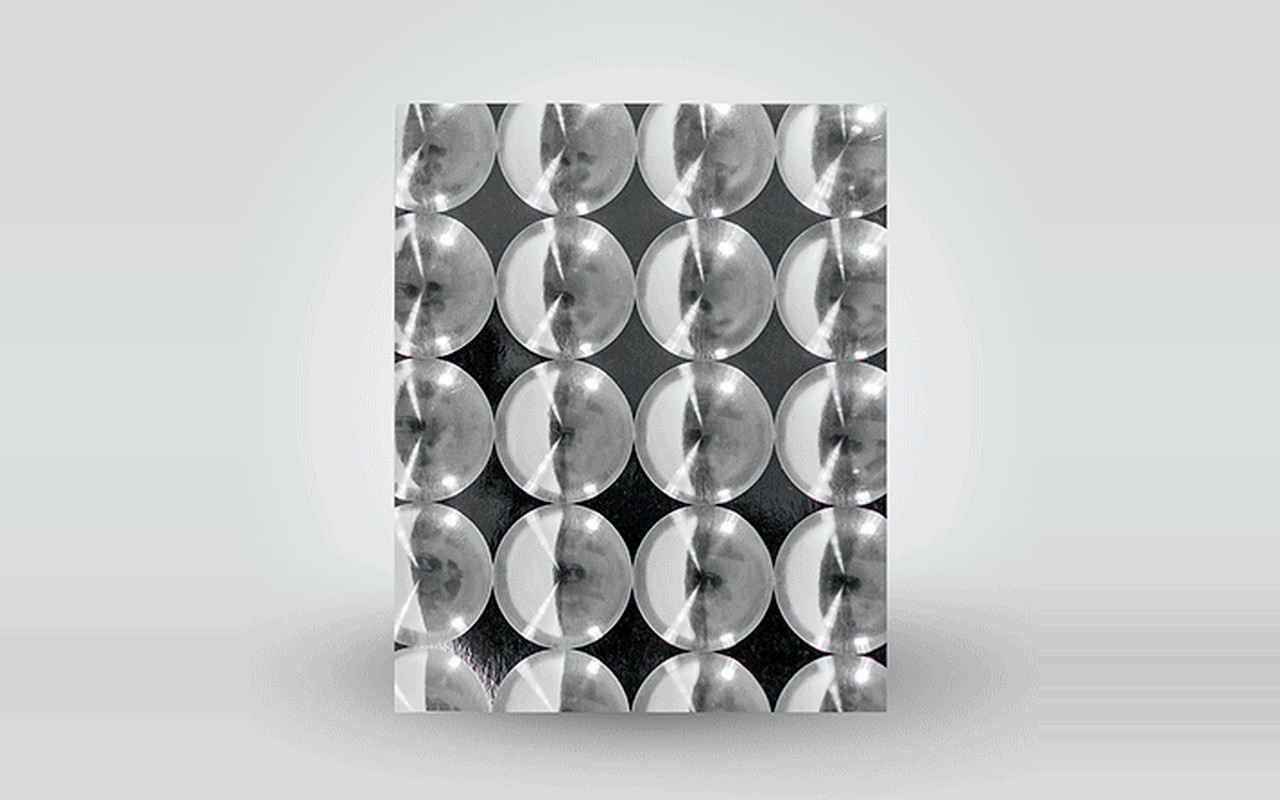
Aluminium Foil Lids, Foil Lift & Hot Stamping Foils
Absolute barrier in eight microns. Aluminium is the only material that stops oxygen, light and moisture completely — and it is still the most elegant thing you can put on top of a cup.
Why aluminium is still unbeaten as a barrier
Every plastic barrier is a matter of degree: EVOH slows oxygen, metallized PET slows it further, a coating slows it further still. Aluminium foil stops it. Above about seven microns, foil is effectively impermeable to oxygen, water vapour and light, which is why it remains the material of choice for products with a long ambient shelf life or a genuine sensitivity to light.
Foil also has a property no film has: dead fold. It stays where you bend it. That is why a foil lid conforms cleanly around a cup rim, why a foil-based sachet lies flat, and why a peel tab made of foil stands up instead of flopping back down.
The trade-offs are real and we state them. Foil cannot be microwaved. It is opaque, so the product cannot be seen. It flex-cracks if it is handled roughly without a nylon or PET layer to protect it. And it is not compatible with a mono-material recycling story. Where those matter, we quote a high-barrier alternative alongside.
Lidding, induction liners and foil lift
Die-cut foil lids for cups and jars are the classic application: printed or plain, with a heat-seal lacquer matched to your container resin, with or without a pull tab. We supply them stacked and counted, or on reel for automatic sealers.
Induction liners are a different animal: a foil disc inside the closure that is welded to the container rim by an induction field after capping. They are the standard tamper-evident seal on supplements, sauces and personal care, and they need to be specified against both the closure and the container material.
Foil lift — a lidding with an integrated raised tab — solves the single most common consumer complaint about foil lids, which is that they are hard to start. The tab is formed so it does not lie flat against the surface, and it is worth the small extra cost on any product aimed at older consumers or eaten on the move.
Hot stamping foils as a decorative material
The same aluminium technology also serves decoration. Hot stamping foil is a carrier film coated with a release layer, a lacquer, a vacuum-metallized layer and an adhesive; heat and a metal die transfer the metallic layer onto your label, carton or capsule.
We stock gold, silver, copper, coloured and holographic foils, plus matte and brushed finishes that read as metal rather than as shine. Combined with a sculpted embossing die, this is the classic wine crest and the reason a premium spirits label looks like a premium spirits label.
Hot stamping is also used functionally: security holograms, tamper-evident devices and variable-position foil for authentication. If your category has a counterfeiting problem, this is one of the cheaper deterrents available.
What this product includes
Typical applications
- Yogurt, cream and dairy cup lids with a printed face
- Induction seals on supplements, sauces and personal care bottles
- Portion packs of butter, jam, honey and creamer
- Pharmaceutical and nutraceutical blister and sachet foils
- Wine capsules, labels and cartons decorated by hot stamping
- High-barrier sachets for powders, spices and single-serve
Films, resins and finishes
- Aluminium foil 7 – 40 µm, soft and hard temper
- Heat-seal lacquers for PP, PET, PS, glass and PLA
- PET and nylon laminations for puncture protection
- Induction liner constructions with pulp or foam backing
- Hot stamping foils in metallic, pigment and holographic finishes
- Printed or plain foil with matte or gloss overprint varnish
Frequently asked questions about aluminium foil lids & foil lift
No. Aluminium in a microwave arcs. If the product is reheated in the pack, you need a metal-free high-barrier film, and we will quote an EVOH or metallized alternative and tell you honestly what shelf life you give up.
A heat-seal lid is applied by a sealing head that presses and heats the lid onto the container rim. An induction liner sits inside a screw cap and is welded to the rim by an electromagnetic field after the cap is applied. Different equipment, different applications, both tamper evident.
Yes, up to ten colours, plus matte or gloss varnish. Foil takes ink beautifully and lets you reverse out to bright metal for a very high-contrast design, which is difficult to achieve on any other lidding substrate.
Yes — a sculpted combination die stamps and raises in one pass, which is how a wine crest or a monogram gets both the metal and the relief. It costs one die rather than two operations and the registration is perfect by definition.
Let's spec your packaging
Send us the product, the process and the volume. You get a structure proposal, a tooling cost and a lead time within 24 business hours.