
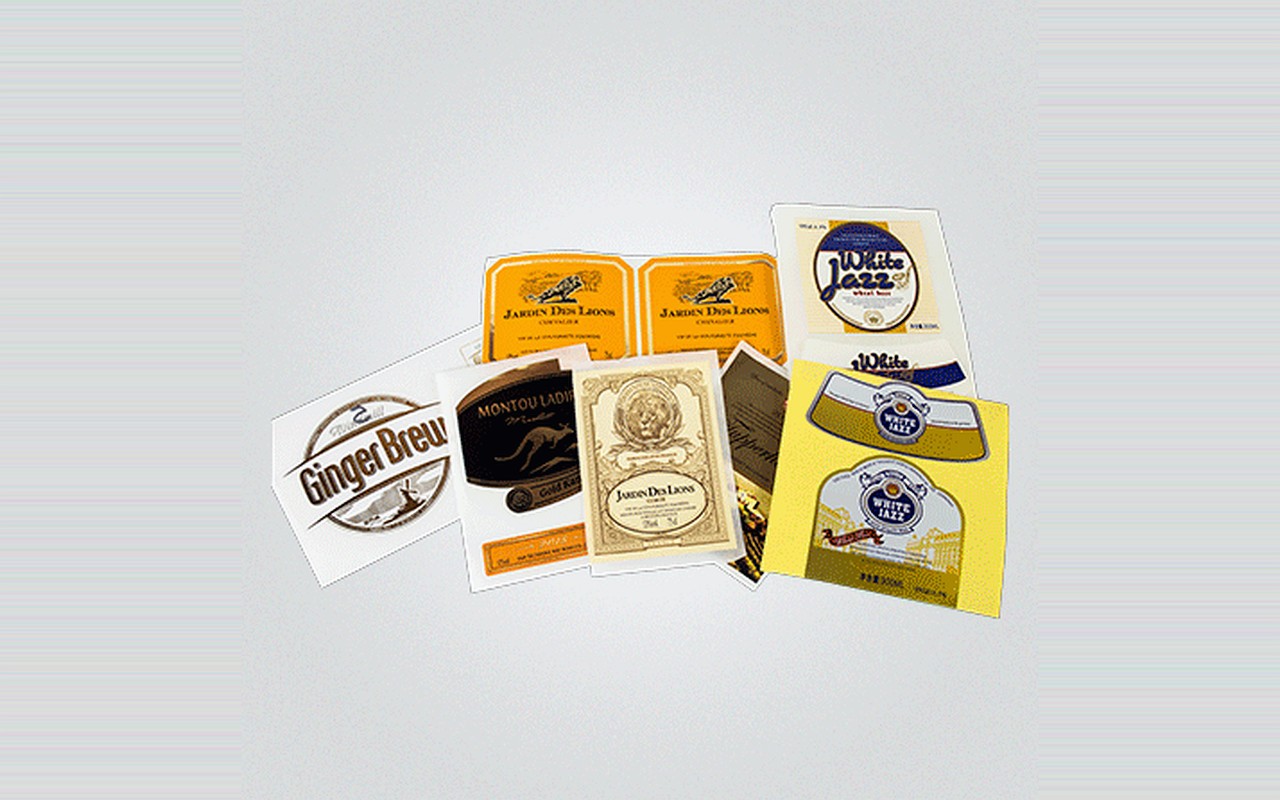
Pressure-Sensitive & Wine Labels
A label is much more than the identification of a brand. It is the one square of your product a shopper reads at arm's length, and the only place a premium price is ever justified.
Face stock, adhesive, liner — in that order
A label is three decisions stacked on each other, and buyers usually discuss only the first. The face stock is what the customer sees and touches: a cotton or felt-textured paper on a wine bottle, a clear BOPP for a no-label look on a sauce, a metallized polyester for a supplement, an estate-grade uncoated for an olive oil.
The adhesive is what decides whether the label survives. A wine label needs wet-strength paper and an adhesive that will not release in an ice bucket. A label on an HDPE squeeze bottle needs an adhesive tuned for a low-surface-energy plastic. A frozen or refrigerated pack needs a cold-tack adhesive that grabs on a wet, chilled surface. Choosing a general-purpose permanent for everything is how labels end up curling in a display case.
The liner decides how the label runs. Glassine, PET and paper liners behave differently on high-speed applicators, and the wrong caliper causes web breaks and dispensing failures. If you tell us the applicator model, we set the roll direction, core, rewind orientation and gap so it runs the first time.
Finishing is where a label earns its price
Cold foil, hot stamping, sculpted embossing, screen-effect tactile varnish, soft-touch matte lamination, spot gloss over matte and metallic inks are the vocabulary of a premium label. They cost cents; they change how a bottle is perceived on a shelf next to fifty competitors.
Cold foil is applied inline before printing, which means colour can be printed on top of it — this is how you get a gold that shifts to bronze or rose without buying three foils. Hot stamping is applied with heat and a die afterwards, gives a brighter, sharper metal and can be combined with embossing in a single sculpted operation, which is the classic wine crest.
Tactile varnishes deserve more attention than they get. A raised grain under a matte field, a sandy texture on a mezcal label, or a gloss that only exists where the illustration is — these register in the hand before the eye reads the name, and they are the cheapest luxury signal available in print.
Wine, spirits and the regulatory panel
Wine and spirits labelling carries mandatory content that varies by market: alcohol by volume, net contents, government warnings, allergen and sulphite declarations, importer details, and in Mexico the NOM panel and the responsible-party address. A label that is beautiful and non-compliant is a reprint.
We build the mandatory panel as a separate, locked layer in the artwork file so it survives design revisions, and we check point sizes and contrast against the requirement rather than against the layout. For brands selling on both sides of the border, we maintain the US and Mexican versions as one job with a shared front panel so the colour never drifts between the two.
The same discipline applies to barcodes. We check magnification, bar-width reduction for the substrate and print process, and quiet zone. A barcode that scans on a proof and fails at the till is almost always a substrate problem nobody checked.
What this product includes
Typical applications
- Wine, mezcal, tequila and craft spirits bottle labels
- Olive oil, vinegar and specialty condiment labels
- Supplements, nutraceuticals and personal care containers
- Deli, bakery and prepared-food weigh labels
- Back labels, neck tags and promotional on-pack coupons
- Private-label and seasonal variants off a shared front panel
Films, resins and finishes
- Textured cotton, felt and laid wine papers with wet-strength
- Clear and white BOPP, PP and PET film faces
- Metallized polyester and pearlescent stocks
- Permanent, removable, cold-tack and LSE-plastic adhesives
- Cold foil, hot stamping foil and sculpted embossing dies
- Tactile screen varnish, soft-touch lamination and spot gloss
Frequently asked questions about pressure-sensitive labels
It will if it is specified for it: a wet-strength face paper and an adhesive rated for wet application and cold immersion. A standard uncoated paper with a general-purpose adhesive turns to pulp at the edges within twenty minutes, which is a very expensive way to learn the difference.
Yes, and it is the reason cross-border brands work with us. We keep both versions as one job with a shared front panel so the two markets never drift apart in colour, and we handle the mandatory content in the language each market requires.
Cold foil is laid down inline before the colours, so you can print over it and create shifted metallics from a single silver foil — economical and flexible. Hot stamping is applied afterwards with heat and a metal die: brighter, sharper, and it can be combined with embossing in one sculpted pass. Wine crests are almost always hot stamped.
Yes. Digital printing covers launch quantities and seasonal variants economically, with no plate cost, and we move a design to flexo once the volume justifies it. We will tell you where that crossover sits for your artwork rather than defaulting to whichever suits us.
Let's spec your packaging
Send us the product, the process and the volume. You get a structure proposal, a tooling cost and a lead time within 24 business hours.