
Colour That Survives a Reorder: What a Signed Colour Target Actually Is
Brands do not lose their colour in one bad print run. They lose it a little at a time, over four years of reorders each measured against the previous one.
Pantone is a starting point, not a standard
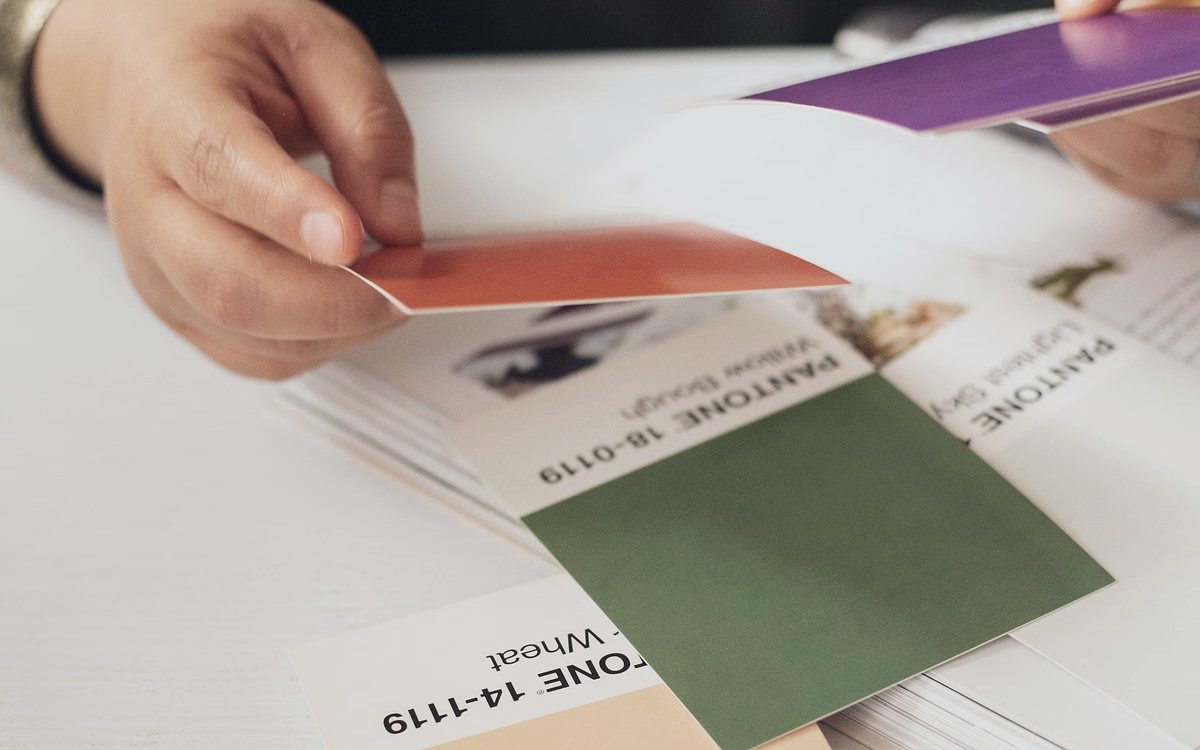
A Pantone number specifies an ink mixed to a formula and printed on a specific coated or uncoated paper. Almost nothing in flexible packaging is either of those things. The same number printed on metallized film, on kraft paper, on white BOPP and on a corrugated case produces four visibly different colours, and all four are technically correct.
The reason is substrate. Colour is what the eye receives after light interacts with ink, with whatever is underneath the ink, and with the surface finish. A matte laminate absorbs; a metallized substrate reflects through the ink; an uncoated paper lets ink sink and dry back.
So a serious specification is not 'Pantone 288'. It is a physical printed sample on your actual substrate, measured with a spectrophotometer, recorded as Lab values with a stated tolerance in ΔE. That is what we mean by a signed colour target.
How colour drifts, and why it is nobody's fault
Nobody sets out to change a brand colour. What happens is that each reorder is compared against the last one. A run that is very slightly warmer is approved because it is close to the previous run. The next run is compared to that one, and so on.
Twelve reorders later, the colour is measurably different from the original, and there is no single run anyone can point to as the mistake. The old and the new sit side by side on a shelf and the difference is obvious, but every individual approval was reasonable.
The cure is simple and disciplined: every run is measured against the original signed target, never against the previous run. That is a process decision, and it costs nothing except the willingness to keep the target and actually use it.
What a real colour approval looks like
Before the first production run, we produce a draw-down or a press proof on your actual substrate with your actual ink system. You look at it under controlled lighting — not on a desk next to a window, because metamerism will make two samples match under one light and clash under another.
You sign it. We measure it and record the Lab values and the tolerance. That record, plus the physical retain, becomes the reference for every subsequent run of that job, including runs three years later on a different press.
For a family of components — a label, a capsule, a case and a sleeve — the same target governs all of them, with per-substrate tolerances where the physics makes an exact match impossible. Stating that up front is more useful than promising a match that cannot exist.
The practical things that break colour
Substrate changes: switching a white BOPP for a slightly different white, or a matte laminate for a different matte, moves colour even with identical ink. Any substrate change should trigger a re-approval.
Ink system changes, especially between solvent and water-based or between gravure and flexo, change gamut and density. A design moved from gravure to flexo for cost reasons will need its colours re-targeted, and that should be planned rather than discovered.
And viewing conditions. Approving a proof under a warm office light and then rejecting a production run under a cool warehouse light is one of the most common and most avoidable disputes in this industry. Use a controlled light booth or agree on a standard illuminant, and put it in the specification.
Five questions to ask before your next reorder
Do you hold a signed physical target for this job, and where is it? Is each run measured against that target or against the previous run? What ΔE tolerance are we working to, and who decided it?
If we change substrate or press, what is the re-approval process? And is the same target being used for every component of this brand, or does each component have its own?
A supplier who can answer those five immediately is running a colour programme. A supplier who cannot is running a print shop and hoping.
Let's spec your packaging
Send us the product, the process and the volume. You get a structure proposal, a tooling cost and a lead time within 24 business hours.